

How to Start a Recycling Business in India
Updated: Apr 13
If you search for how to start a recycling business in India, you will see two types of advice.
Some make it look very easy.
Some make it so technical that you feel stuck before starting.
Both are misleading. Because the real problem is not machines, licenses, or even investment.
The real problem is this: Most people do not understand where to enter this business from. And because of that, they either delay starting or start at the wrong level and lose money.
Table of Contents
Where You Should Start
Recycling Is Not One Business
Recycling is not a single activity, it is a chain.
Someone collects waste
Someone sorts it
Someone processes it
Someone uses it as raw material
If you try to enter at the wrong point, everything feels complicated. If you enter at the right point, the business starts making sense.
Where You Should Start
There are three levels in this business, but most beginners should not look at all three as equal options.
A) Starting from Scrap Collection
This is where most real businesses begin. You collect recyclable waste like plastic, paper, or metal from:
Local shops
Housing societies
Small factories
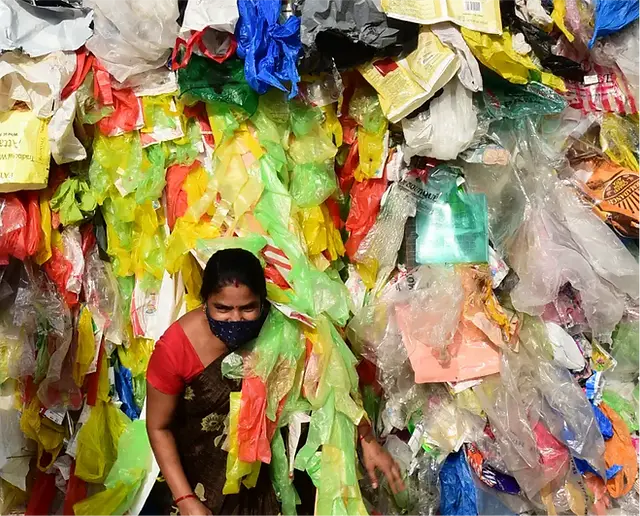

And you sell it to a scrap dealer or recycler. This may look small, but this is the base of the entire system. To understant more about the supply-chain of recycling business, you must visit trade events like IFAT or Reecommerce or GCPRS.
Basic cost to start
Weighing scale: ₹3,000 to ₹10,000
Initial working capital to buy scrap: ₹10,000 to ₹50,000
Transport (cycle or rented vehicle): ₹5,000 to ₹20,000
Small storage space (optional): ₹5,000 to ₹15,000 per month
You can realistically start within ₹20,000 to ₹1 lakh.
B) Aggregation and Sorting
At this level, you do not just collect, you:
Buy scrap in bulk
Sort it into categories
Sell at better rates


This improves your margins because sorted material has higher value.
Basic cost to start
Storage or warehouse: ₹10,000 to ₹40,000 per month
Labour for sorting: ₹10,000 to ₹30,000 per month
Working capital: ₹50,000 to ₹2 lakh
Equipment: ₹20,000 to ₹1 lakh
Typical starting range is ₹1 lakh to ₹5 lakh.
C) Processing or Recycling Unit
This is where waste is converted into usable raw material. For example:
Plastic into granules
Paper into pulp
Metal into reusable scrap
This is what most people imagine when they think of recycling, but this is not where beginners should start.
Basic cost to start
Machines: ₹3 lakh to ₹25 lakh+
Factory setup: ₹2 lakh to ₹10 lakh
Electricity and utilities: high running cost
Labour: ₹20,000 to ₹1 lakh per month
This level requires ₹5 lakh to ₹50 lakh or more.
If you are seriously considering this business, check these trending eco-friendly products you can manufacture or sell in India.
Simple Way to Decide
If you are new, start from scrap collection
If you understand supply, move to aggregation
If you have capital and experience, then think of processing
This is how most stable businesses in this space grow.
What Actually Matters in This Business
Most people focus on the wrong things and think about machines and licenses first. But the business actually depends on two things:
Supply: Can you get waste every day or every week?
Buyers: Can you sell it without delay?
If either of these is not stable, the business will struggle.
Licenses and Registrations
This is where many beginners get confused.
a) For scrap collection
Usually no major license is required to start small
You may need a basic local trade license depending on area
b) For aggregation
Trade license from local authority
GST registration if turnover increases
Basic compliance depending on scale
c) For processing units
Pollution Control Board approval
Factory license
GST registration
For certain waste types like e-waste or plastic, additional approvals
Do not delay starting because of licenses. Start small and formalise as you grow.
Government Support and Schemes
The government is actively pushing recycling and waste management. Some practical support areas include:
A) EPR (Extended Producer Responsibility)
Companies are required to ensure recycling of their waste. This creates demand for:
Collection partners
Aggregators
Recyclers
This is a long-term opportunity.
B) MSME benefits
If you register as an MSME, you can get:
Easier access to loans
Subsidies on machinery in some cases
Lower interest rates
C) Subsidy and loan schemes
Some schemes that may support recycling businesses:
Credit Guarantee Fund Trust for Micro and Small Enterprises (CGTMSE)
Prime Minister Employment Generation Programme (PMEGP)
State-level waste management incentives
Support depends on location and business type, so you need to check locally.
Common Mistakes
Starting with machines without understanding supply
Investing too much in the beginning
Not having confirmed buyers
Choosing complex areas like e-waste without experience
This is why many people leave this business early.
What Starting Actually Looks Like
A typical small operator:
Works within a small local area
Focuses on one type of material
Builds 10 to 20 supply contacts
Sells to 1 or 2 regular buyers
No big setup, Just consistent flow.
Is This Business Profitable?
Yes, but not instantly. Profit improves when:
Your volume increases
Your sorting improves
Your transport cost reduces
Your buyers become stable
This is a steady business, not a quick-profit model.
If you wish to go deeper about recycling business and understand:
Full business models
Detailed economics
Licensing structure
Scaling opportunities
You can read our detailed guide on recycling businesses where everything is explained in depth.
Final Thought
Recycling in India is a real opportunity but it works only when you start at the right level. Do not try to start big, start where the system actually begins. Build slowly, that is how this business grows.
Comments